Smart Home Office Renovation Ideas That Increase Productivity
Posted Date:
As remote and hybrid work continue to reshape how people use their homes, a well-planned home office renovation has become more than a convenience—it’s an investment in productivity, comfort, and long-term property value. The biggest question many homeowners face is whether to create a dedicated office or design a flexible multi-purpose workspace.
Both approaches can be highly effective when planned correctly. The right choice depends on available space, work habits, household size, and long-term goals. This comparison examines both options objectively to help homeowners make an informed decision.
Overview
A successful home office should support concentration, organization, and daily comfort while fitting naturally into the rest of the home.
The two most common renovation strategies are:
Option A: A dedicated home office with a single purpose.
Option B: A flexible room that serves as both an office and another living space.
Feature
Dedicated Office
Multi-Purpose Workspace
Privacy
Excellent
Moderate
Space Efficiency
Moderate
Excellent
Organization
Excellent
Good
Flexibility
Limited
Excellent
Professional Appearance
Excellent
Good
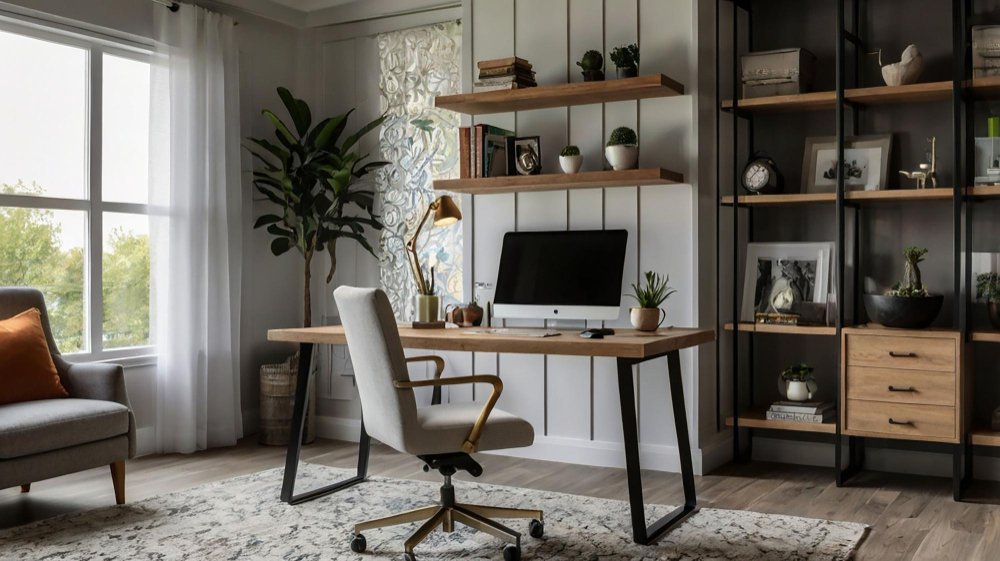
Option A: Dedicated Home Office
A dedicated office is designed exclusively for work. This approach is ideal for homeowners who spend most of the week working from home or frequently participate in virtual meetings.
Because the room has a single purpose, every design decision can focus on productivity, including lighting, acoustics, ergonomics, storage, and technology.
Advantages
Maximum privacy and concentration.
Better sound control during meetings.
Permanent ergonomic workstation.
Greater storage capacity.
Professional appearance for video calls.
Pros
Excellent productivity.
Minimal daily setup.
Better work-life separation.
Easy cable management.
Cons
Requires a dedicated room.
Less flexibility for changing family needs.
Higher renovation costs in some homes.
Option B: Multi-Purpose Workspace
A multi-purpose office combines work with another function such as a guest bedroom, library, loft, or family room. This solution is increasingly popular in homes where every square foot matters.
Modern furniture, built-in storage, and thoughtful layouts allow one room to transition between different activities throughout the day.
Advantages
Excellent use of available space.
Greater flexibility.
Suitable for occasional remote work.
Lower renovation costs in many cases.
Easier integration into existing layouts.
Pros
Highly versatile.
Ideal for smaller homes.
Supports changing family lifestyles.
Efficient use of square footage.
Cons
More household distractions.
Limited permanent storage.
May require daily setup and cleanup.
Reduced privacy for meetings.
Side-by-Side Comparison
Comparison
Dedicated Office
Multi-Purpose Workspace
Daily Productivity
★★★★★
★★★★☆
Noise Control
★★★★★
★★★☆☆
Storage Capacity
★★★★★
★★★★☆
Adaptability
★★★☆☆
★★★★★
Space Utilization
★★★☆☆
★★★★★
Long-Term Flexibility
★★★★☆
★★★★★
Winner Highlights
🏆 Best for productivity: Dedicated Home Office
🏆 Best for small homes: Multi-Purpose Workspace
🏆 Best for video meetings: Dedicated Home Office
🏆 Best overall flexibility: Multi-Purpose Workspace
Final Recommendation
There is no universal winner because every household works differently. If you work remotely every day, manage confidential information, or spend hours in video meetings, a dedicated office usually delivers the highest level of comfort, organization, and productivity.
If your work schedule is hybrid or your home has limited space, a multi-purpose workspace may offer better long-term value. With thoughtful planning, quality lighting, ergonomic furniture, and efficient storage, one room can successfully support several different activities without sacrificing functionality.
Ultimately, the most successful home office renovation is the one that reflects how you actually work. Prioritize lighting, ergonomics, technology, storage, and acoustics first, then choose the layout that best fits your lifestyle. A workspace designed around your daily routine will continue delivering value long after the renovation is complete.