Why Laundry Room Renovations Improve Daily Efficiency
A laundry room renovation can significantly improve household organization, energy efficiency, and daily convenience. Many older laundry rooms suffer from poor layouts, limited storage, inadequate ventilation, and insufficient workspace, making routine chores more difficult than necessary. With proper planning, homeowners can transform even small utility spaces into highly functional and organized areas.
Modern laundry room renovations focus on workflow optimization, moisture management, storage efficiency, and durable materials. Whether updating a compact closet laundry area or redesigning a dedicated utility room, strategic upgrades can improve both practicality and long-term home value.
Step 1: Evaluate the Existing Laundry Room Layout
Before beginning a laundry room renovation, homeowners should analyze how the current space functions. Identifying bottlenecks and inefficiencies helps guide design decisions during the renovation process.
Common Laundry Room Problems
- Limited countertop space
- Poor storage organization
- Insufficient lighting
- Lack of ventilation
- Awkward appliance placement
- Water damage concerns
- Excessive noise and vibration
Understanding these issues early allows homeowners to prioritize improvements that provide the greatest daily benefits.
Step 2: Optimize Appliance Placement
Efficient appliance positioning is one of the most important aspects of a successful laundry room renovation. Washers and dryers should be placed to maximize accessibility while maintaining smooth workflow between sorting, washing, drying, and folding tasks.
Popular Laundry Appliance Configurations
- Side-by-side washer and dryer setups
- Stackable appliances for small spaces
- Raised appliance platforms with storage drawers
- Closet-style concealed laundry systems
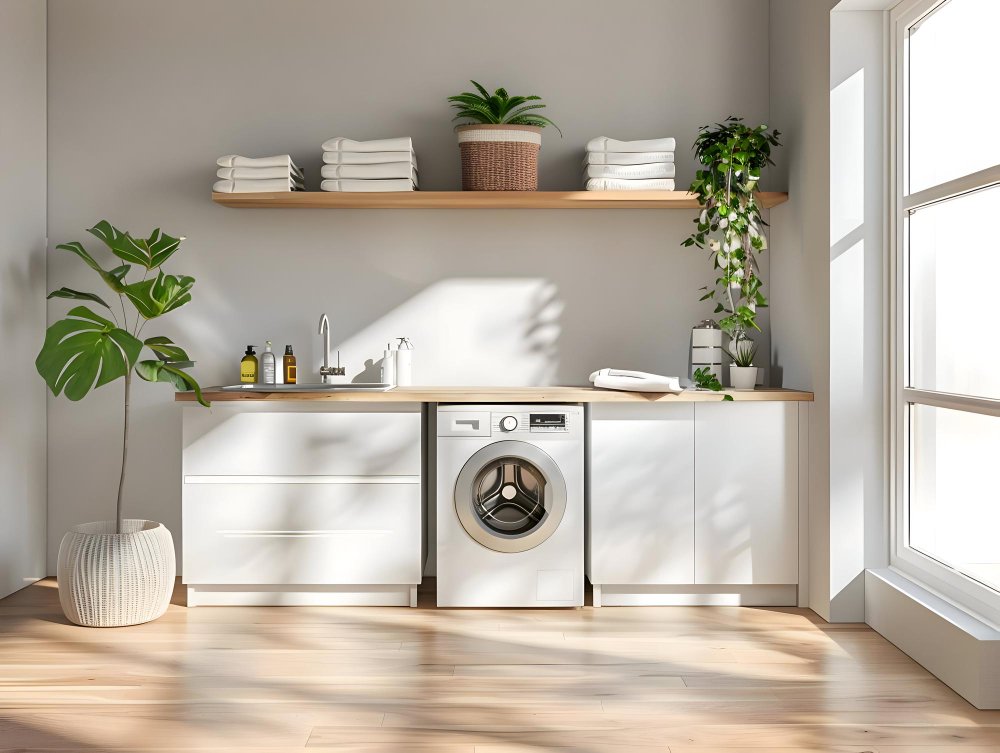
Front-loading appliances are especially popular because they allow countertops to be installed directly above the machines for additional folding space.
Step 3: Add Functional Storage Solutions
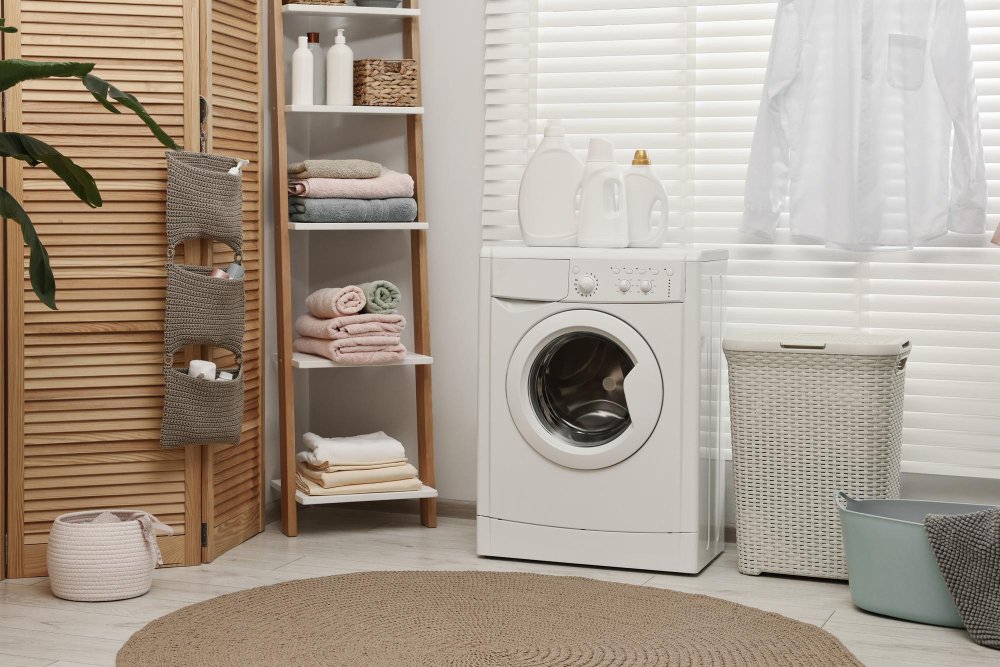
Storage is essential for maintaining an organized laundry room. Cleaning supplies, detergents, baskets, ironing equipment, and linens can quickly create clutter without proper organization systems.
Effective Laundry Room Storage Ideas
- Wall-mounted cabinets
- Open shelving systems
- Pull-out hampers
- Vertical storage racks
- Built-in drying stations
- Hidden utility storage compartments
Custom cabinetry can maximize every available inch while creating a cleaner and more visually appealing environment.
Step 4: Improve Ventilation and Moisture Control
Proper ventilation is critical during any laundry room renovation. Washers and dryers generate heat, humidity, and lint that can negatively affect indoor air quality and surrounding building materials.
Important Ventilation Upgrades
- High-efficiency exhaust systems
- Proper dryer vent installation
- Moisture-resistant wall materials
- Dehumidification systems
- Improved airflow circulation
Good ventilation reduces the risk of mold growth, moisture damage, and overheating while helping appliances operate more efficiently.
Step 5: Install Durable and Water-Resistant Materials
Laundry rooms are exposed to frequent moisture and heavy appliance vibration, making material durability extremely important. Water-resistant surfaces help protect the room from leaks, spills, and long-term wear.
Recommended Laundry Room Materials
- Luxury vinyl plank flooring
- Porcelain tile flooring
- Quartz countertops
- Moisture-resistant drywall
- Mildew-resistant paint finishes
Durable materials improve longevity while reducing maintenance requirements over time.
Step 6: Upgrade Lighting for Better Visibility
Many utility rooms suffer from poor lighting, making tasks such as stain treatment, folding clothes, and sorting laundry more difficult. A well-designed laundry room renovation incorporates layered lighting to improve functionality.
Recommended Laundry Room Lighting
- LED ceiling fixtures
- Under-cabinet lighting
- Task lighting above folding stations
- Natural light enhancements
Bright and balanced lighting creates a more comfortable workspace while improving overall room appearance.
Step 7: Reduce Noise and Vibration
Washers and dryers can generate significant noise, especially in homes where laundry rooms are located near living spaces. Noise control measures improve comfort and reduce household disruption.
Noise Reduction Solutions
- Anti-vibration appliance pads
- Insulated wall cavities
- Solid-core doors
- Sound-absorbing flooring underlayment
These upgrades create a quieter and more pleasant utility environment.
Step 8: Add Folding and Workspace Areas
Functional workspace surfaces improve efficiency and reduce clutter during laundry tasks. Homeowners often overlook the importance of having enough room for folding, sorting, and organizing clothes.
Countertops installed above front-loading appliances or along unused wall sections create valuable work areas without requiring additional square footage.
Step 9: Improve Energy Efficiency
A laundry room renovation is also an excellent opportunity to upgrade energy performance. Modern washers and dryers consume less electricity and water than older models while improving cleaning efficiency.
Energy-Efficient Laundry Upgrades
- ENERGY STAR appliances
- LED lighting systems
- Improved insulation
- Efficient ventilation systems
- Low-flow utility sinks
These improvements help reduce utility costs while supporting more sustainable household operation.
Final Thoughts on Laundry Room Renovation
A thoughtfully planned laundry room renovation can dramatically improve household efficiency, organization, and comfort. By optimizing layouts, improving storage, upgrading ventilation, and selecting durable materials, homeowners can transform utility spaces into highly functional environments.
Even modest laundry room upgrades can simplify daily routines while increasing overall home functionality and long-term property value. Careful planning and quality craftsmanship remain essential for achieving lasting renovation success.